Keep the Character, Fix the Routine: Updating an Older Room
An older room often contains two stories at once. Its proportions, joinery, floor, or hardware carry decades of use, while its lighting, outlets, storage, and furniture arrangement may no longer support daily life. A thoughtful update does not choose between preservation and comfort. It identifies what gives the room character and changes the parts that create friction.
Begin with observation before demolition or decorative decisions. Age alone does not make every feature valuable, but inconvenience alone does not make replacement necessary.
Inventory the character-defining elements
Photograph the room from each corner and list features that are difficult to reproduce: original molding, timber floorboards, built-in cabinets, doors, window proportions, radiators, tile, plaster texture, or hardware. Note their condition separately from their appearance.
A worn surface may need repair rather than concealment. A poorly functioning later addition may have less value than an older element that still performs well.
Map the modern routine
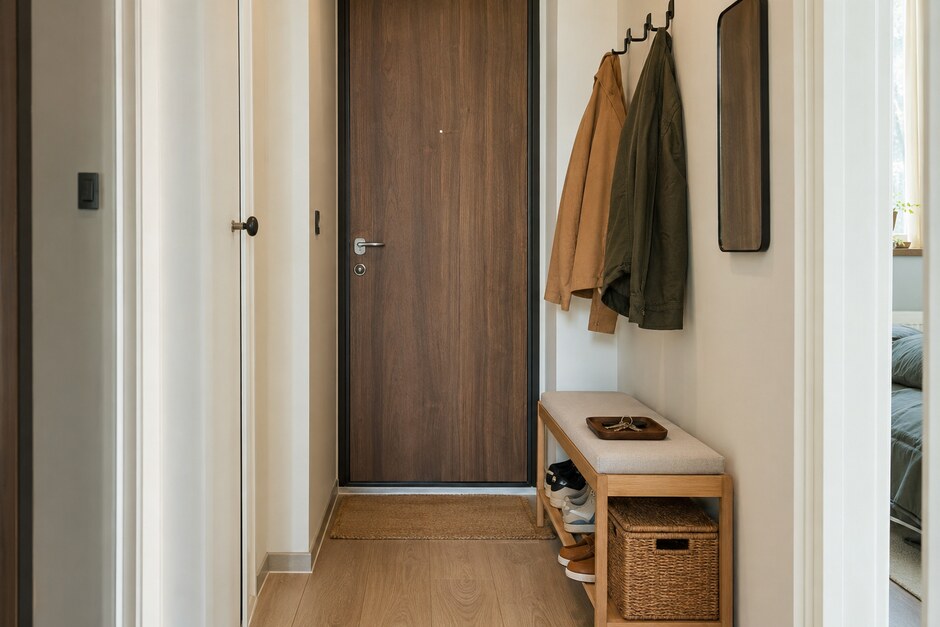
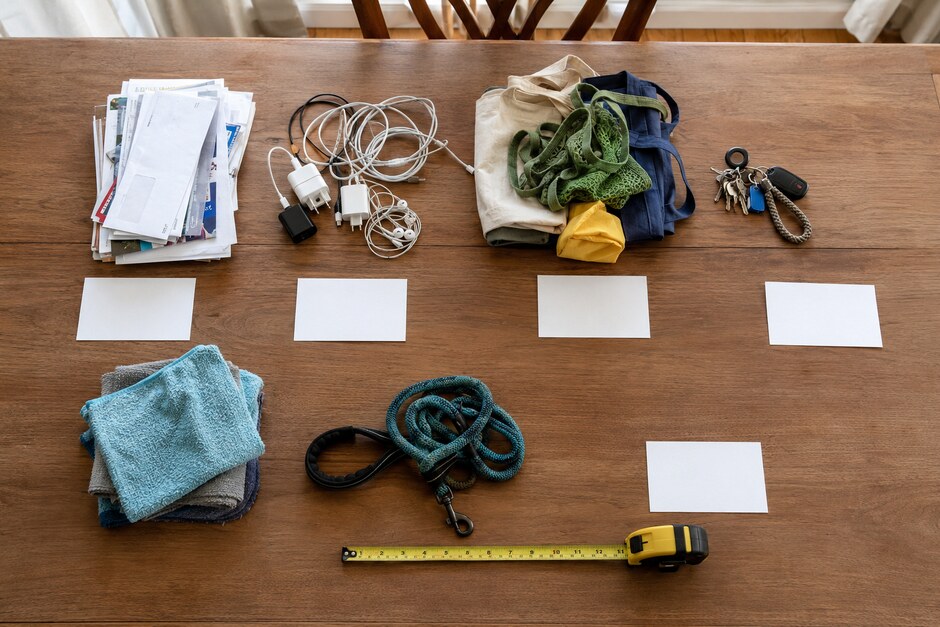
Write how the room is used now. Where are devices charged? Where do people read, work, watch a screen, store cleaning equipment, or move between doors? Mark cables, dark corners, blocked pathways, and furniture that must be shifted for ordinary tasks.
This map turns vague dissatisfaction into specific requirements. The room may not need a new style; it may need one better outlet location, a focused lamp, and storage near the actual activity.
Prioritize safety and building performance
Electrical work, structural changes, damp, hazardous materials, and major repairs require appropriate qualified professionals and local compliance. Decorative preservation should never hide a safety problem. Investigate the cause of stains, movement, or recurring damage before refinishing the surface.
When upgrades are needed, ask whether existing fabric can be protected during the work and whether routes can follow later alterations instead of cutting through original details.
Choose reversible interventions first
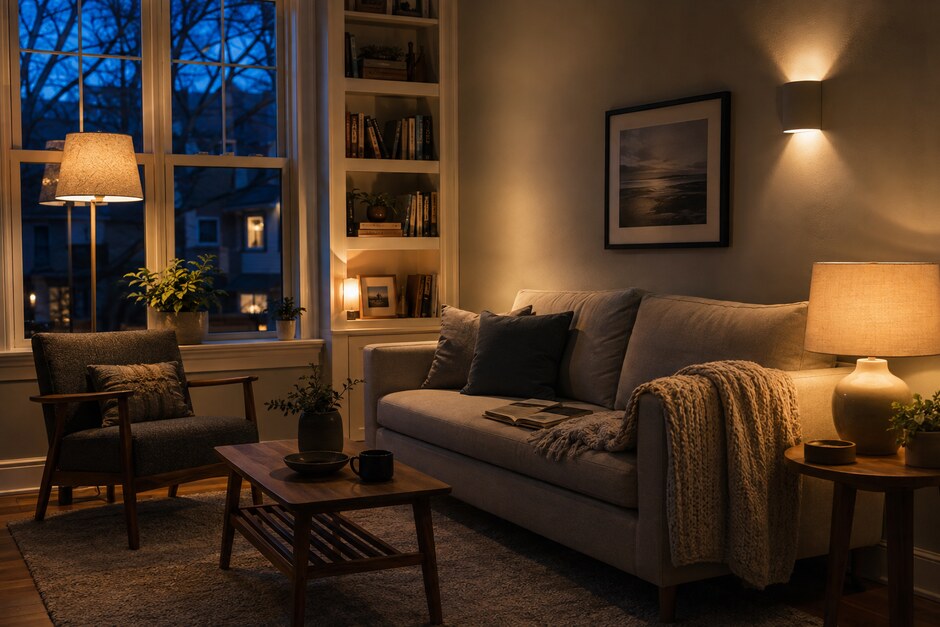
Freestanding storage, surface-mounted lighting in a considered route, curtains, rugs, and furniture layouts can solve many problems without permanently altering the room. Reversibility allows the space to adapt and protects features whose value may become clearer over time.
Use the smallest intervention that completes the routine. A slim table with cable management may support occasional work better than a fitted desk across an original wall.
Repair materials honestly
Old timber, plaster, and metal rarely become perfectly uniform after repair. Aim for structural soundness and a coherent finish rather than erasing every trace of age. Test cleaning and coatings in an inconspicuous area, document what was used, and avoid sealing moisture or damage beneath a cosmetic layer.
New work does not need artificial distressing to belong. A clean repair in compatible material can be quieter than a false imitation of age.
Add contemporary pieces with restraint
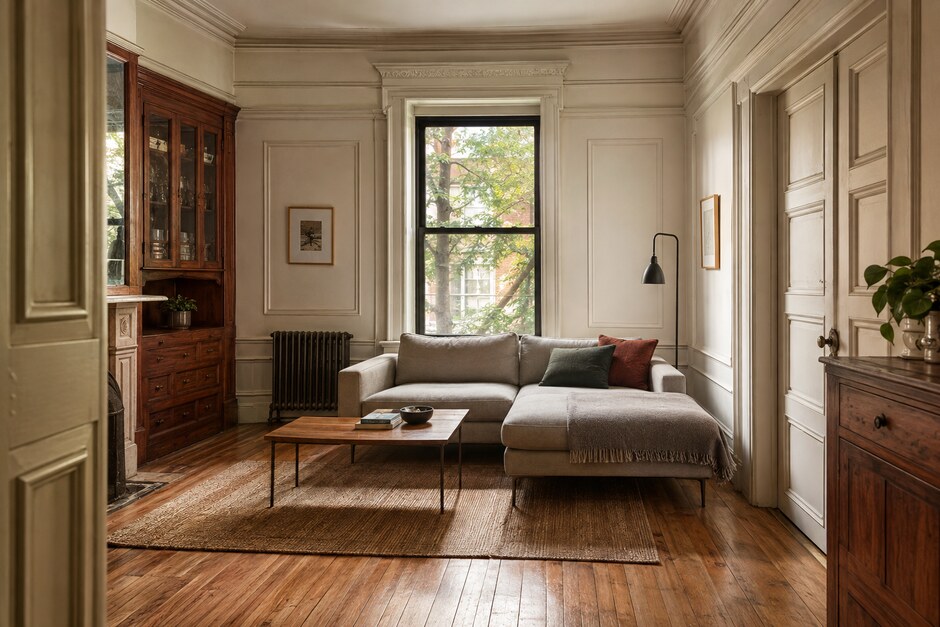
Modern furniture can clarify an older room when its shape, scale, and material are chosen carefully. Repeat one relationship rather than copying period decoration: the dark line of original hardware, the warm tone of timber, or the vertical rhythm of paneling.
Leave space around important built-ins and molding so they remain legible. Oversized furniture can erase character without touching the architecture.
Keep a record of the decisions
Save photographs, paint information, repair materials, professional reports, and notes about hidden services. Future maintenance becomes easier, and later owners can distinguish original fabric from new work.
Review the room after a season of use. The best update should feel less like a visual transformation and more like a reduction in friction. Doors open fully, light reaches the right chair, cables follow a clear route, and storage supports the routine. The room keeps its history because the new work allows it to remain useful.