Before You Buy Storage: Map the Objects That Cause Daily Friction
Storage products promise order because they are easy to picture. The harder question is what the container is meant to solve. A new basket can hide a pile for a week, then become another object that must be moved, cleaned, and searched. Better storage begins with evidence about where daily friction occurs.
Choose one busy zone rather than auditing the entire home. A dining table, kitchen counter, sofa corner, or section of hallway is enough to reveal the pattern.
Keep a seven-day friction log
Once a day, photograph the selected zone before tidying. List the objects that repeatedly appear: mail, chargers, reusable bags, pet equipment, receipts, clothes, medication, tools, or items waiting to leave the home.
Do not judge the mess. Count recurrence. An object that appears five times deserves a nearby system. An object seen once may be temporary and need a deadline rather than permanent storage.
Identify the action behind each object
Ask why the object stops there. Is it arriving, being used, waiting for repair, waiting for another person, or on its way out? These stages need different solutions. Incoming mail needs a review point. A charger needs power and cable control. A return parcel needs a temporary departure zone.
Grouping by action is often more useful than grouping by object type. A single outgoing shelf can hold a library book, shop return, and borrowed tool because they share the same next step.
Assign ownership and decision time
If several people use the zone, decide who makes the next decision for each category. Shared piles grow when ownership is unclear. A labelled personal tray can help, but only if it is reviewed on an agreed schedule.
Temporary storage needs an expiry rule. Set a weekly reset or connect it to an existing routine such as taking out recycling. Otherwise temporary containers become permanent archives.
Measure the real volume
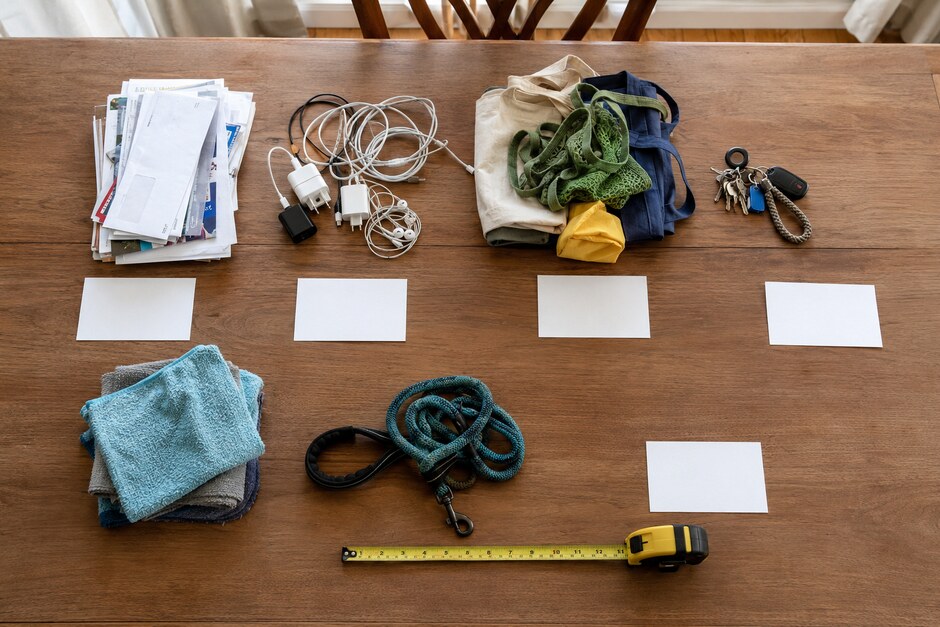
Gather one typical week’s objects and arrange them by category. Measure the largest item and the total footprint. Include the space needed to reach inside, remove a lid, or plug in a device. Storage that fits exactly when packed is often too tight for daily use.
Allow limited growth for legitimate recurring items, not unlimited empty capacity. Oversized containers invite unrelated objects and make categories harder to recognize.
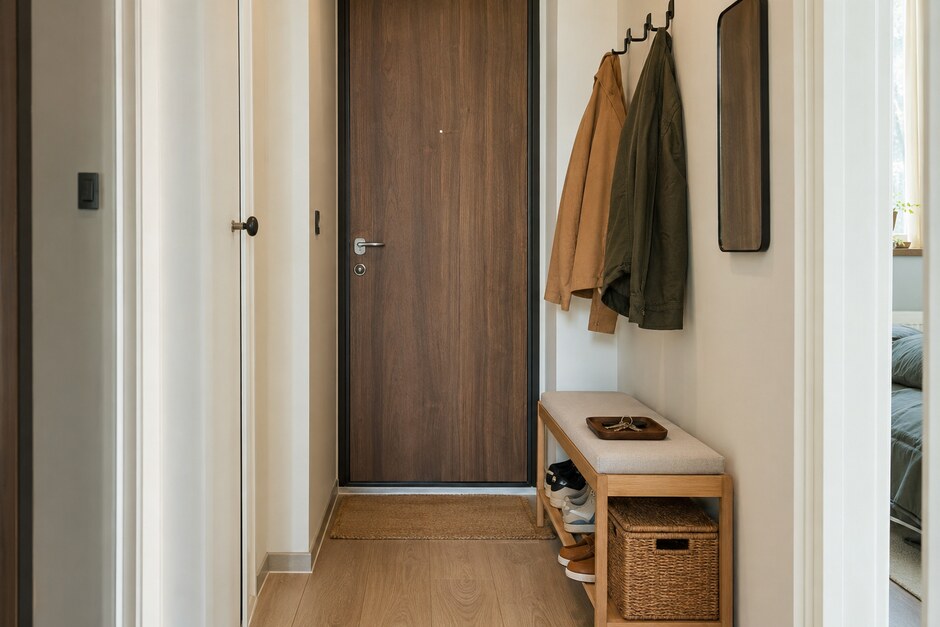
Place the landing zone at the point of release
Notice where the hand naturally lets go. A key hook two rooms away will lose to the nearest flat surface. A laundry basket hidden behind a difficult door will lose to the chair. Move the solution toward the behavior before asking people to create a new route.
The best location may be visually inconvenient. Use a shallow closed box, wall pocket, or tray that supports the action without dominating the room.
Test with ordinary containers first
Use a spare box, bowl, paper tray, or taped floor outline for one week. This reveals whether the size, location, and category are correct before money is spent. If the trial container stays empty while clutter collects beside it, the problem is placement or an unclear action.
Change one variable at a time. Moving and resizing simultaneously makes it difficult to know what improved the routine.
Buy for access, not just appearance
Once the trial works, choose a durable container with the right opening, depth, cleanability, and visibility. Frequently used categories need one-motion access. Rarely used categories can tolerate lids or higher shelves. Heavy objects need stable low storage.
Review the zone after a month. Remove containers that have become miscellaneous, and update categories when routines change. Effective storage is not measured by how much it conceals. It is measured by how few daily decisions are required to put an object where its next action can happen.