The One-Metre Reset: Make a Small Entryway Work Harder
A small entryway does not fail because it lacks square metres. It fails when too many actions compete for the same patch of floor. Shoes are removed, keys are dropped, bags are set down, coats are hung, parcels arrive, and someone still needs a clear route through the door. The most useful reset begins with this sequence of actions, not with a shopping list.
Work with a single metre of wall or the nearest practical zone. A limited boundary makes the decisions specific and prevents the entrance from slowly expanding into the rest of the room.
Watch one ordinary arrival
Enter the home as you normally would and notice the order of your movements. Which hand holds the keys? Where does a wet coat naturally go? Do you need to sit to remove shoes? Which object lands on the floor because its intended storage is too far away?
Write the sequence in plain language. A typical pattern might be: open door, put down bag, remove shoes, hang coat, place keys, carry mail inside. The new layout should support that order with as few crossed paths as possible.
Clear the route before adding capacity
Mark the door swing and the walking line. Nothing should force a person to step around a basket, close the door before taking off a coat, or move one object to reach another. Remove everything from the selected zone, then return only the items used at least weekly.
Seasonal gear can live elsewhere. The entrance should serve current weather and current routines. Ten rarely worn coats on a rail make the two daily coats harder to use.
Assign one job to each height
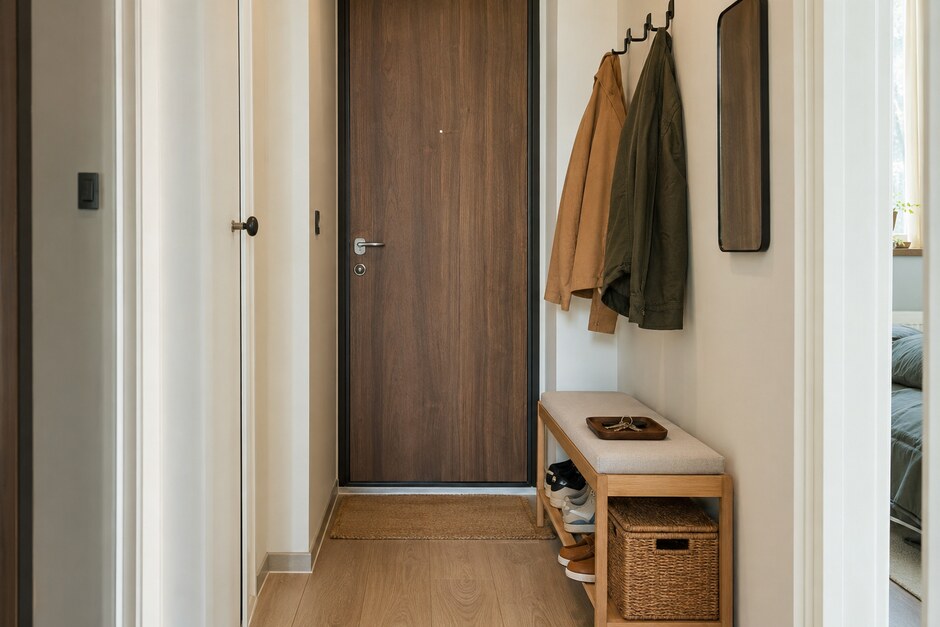
Use the wall in layers. Hooks at comfortable hand height suit coats and bags. A shallow shelf or tray at waist height can receive keys and sunglasses. The lower zone can hold daily shoes or a closed basket for small outdoor items. The highest shelf, if safe and reachable, is better for light seasonal pieces than daily essentials.
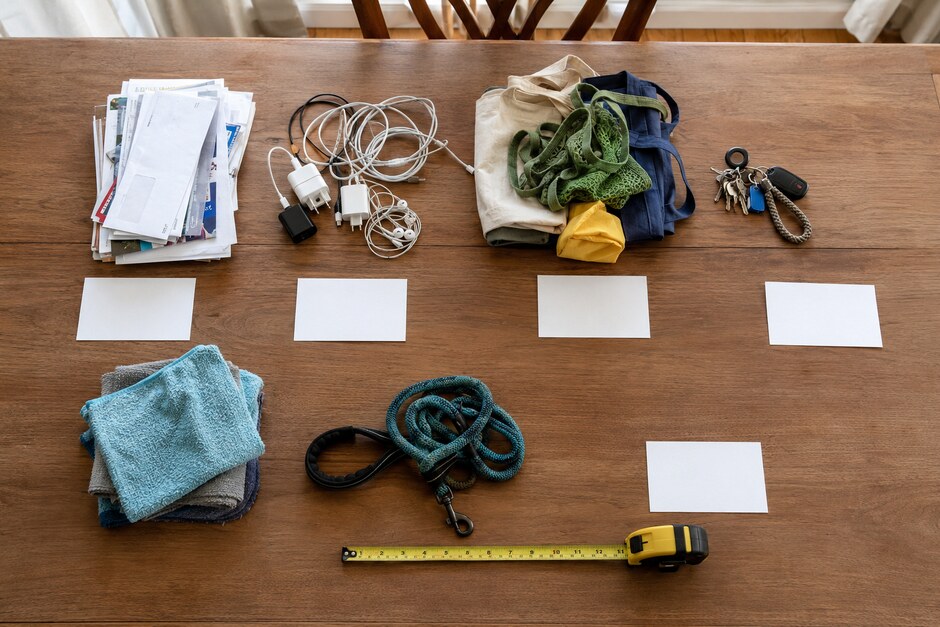
Keep the number of containers lower than the number of object categories. One divided tray is often clearer than five decorative bowls. Storage should reduce decisions, not create a new sorting ritual at the door.
Measure the objects and the body
Before buying a bench or cabinet, measure the largest daily shoes, the depth of the open door, and the space needed to bend or sit. A shallow piece that preserves movement is more useful than a deep unit with greater theoretical capacity.
Check hook spacing with actual coats. Thick winter layers require more distance than product photographs suggest. Place the lowest hook so a bag does not rest on shoes or block the bench.
Separate wet, clean, and temporary items
Wet footwear and umbrellas need airflow and a surface that tolerates moisture. Clean scarves and gloves need containment. Parcels and outgoing returns need a temporary location with an expiry date. When these groups share one basket, every arrival becomes a search.
A washable mat should cover the step where shoes are actually removed, not merely decorate the centre of the hall. Leave enough visible floor around it to spot grit and clean quickly.
Create a visible reset cue
The entrance needs a simple end-of-day standard: floor clear, keys in the tray, daily shoes aligned, bags on hooks. Make this state easy to see at a glance. Closed storage can hide visual noise, but one open surface helps reveal when the system is overloaded.
Test the arrangement for a week before drilling extra holes or buying fitted furniture. If an object repeatedly lands outside its assigned place, move the place toward the behavior. Good entryway design does not demand perfect discipline. It shortens the distance between what people already do and where each object belongs.